
The short answer first
If you rent and your lease says "return the walls as you found them," peel-and-stick wallpaper is usually the safer bet — not because it looks better than paint, but because it leaves nothing behind. Paint wins on cost per square foot and durability, but only if your landlord has agreed in writing and you are willing to repaint before you leave. Everything below is the side-by-side reasoning behind that verdict, criterion by criterion, so you can decide for your own lease, budget, and patience.
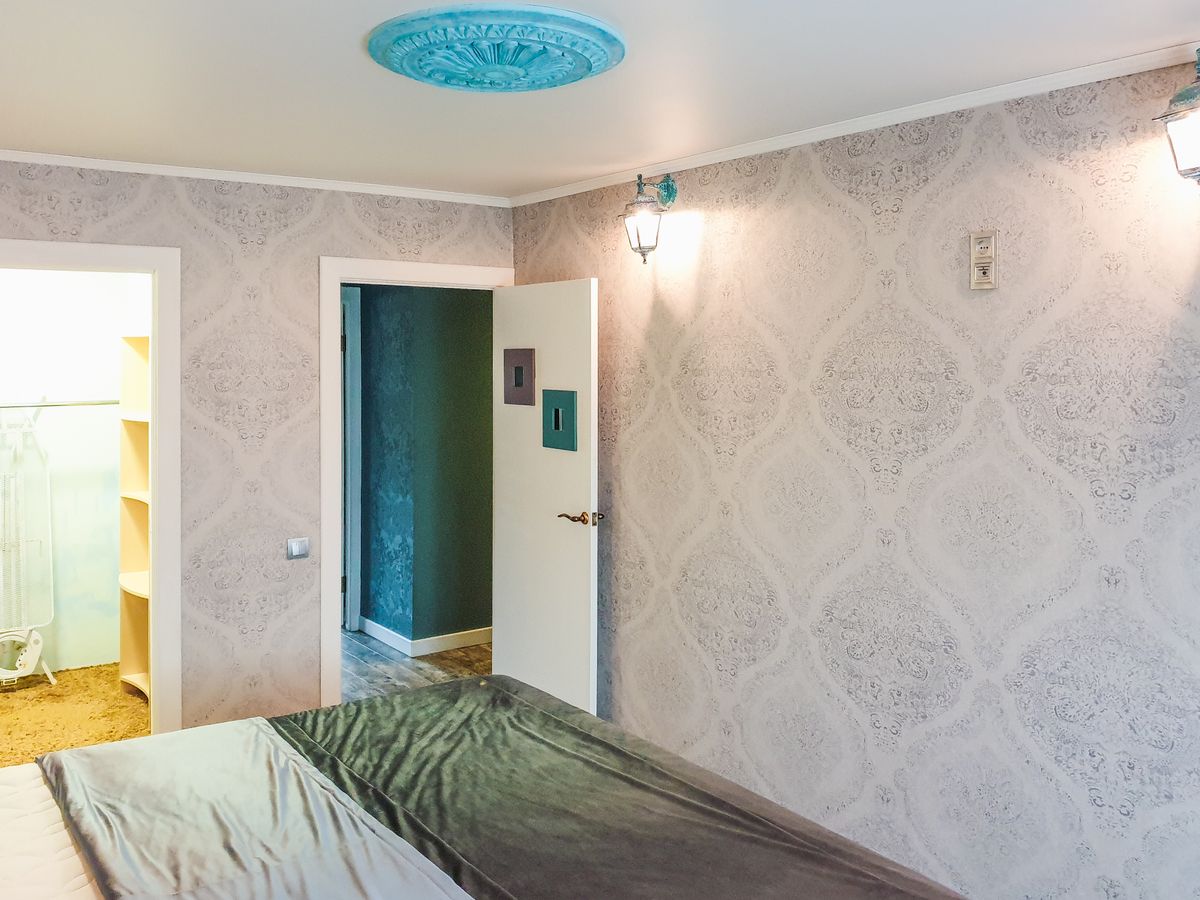
Side by side
| Criterion | Peel-and-stick wallpaper | Paint |
|---|---|---|
| Upfront cost (one accent wall) | Moderate — typically 2–3 rolls for a feature wall | Low — one gallon usually covers an accent wall with coats to spare |
| Time to finish | An afternoon for one wall, including measuring and trimming | A weekend once taping, two coats, and drying time are counted |
| Skill needed | Patience more than skill; panels can be repositioned while you work | Moderate; cutting-in edges and avoiding drips take practice |
| Finish options | Patterns, textures, and faux finishes (grasscloth, brick, botanical) that paint cannot copy | Any solid colour, plus techniques like limewash-style blending |
| Durability | Good in dry rooms; edges can lift in steamy bathrooms unless the product is rated for humidity | Excellent; the most hard-wearing option of the two |
| Removal | Peels off in sheets on most sound, satin-or-gloss painted walls | Does not "come off" — you repaint over it, usually back to the original colour |
| Landlord risk | Low when a test patch is done first and the wall paint is in good condition | High without written permission; colour usually must be restored at move-out |
| Best room | Bedrooms, living rooms, entryways — one feature wall | Whole rooms where a colour change is the actual goal |
Cost: the number nobody adds up
Paint looks cheaper, and per wall it is — until the move-out repaint goes on the bill. A renter who paints an accent wall pays twice: once to put the colour on, and once in time, supplies, or deposit deductions to take it back to the original shade. Peel-and-stick costs more on day one and roughly nothing on moving day, provided it was applied to a wall whose existing paint was sound. For a tenancy of a year or two, the totals land surprisingly close; for a short tenancy, peel-and-stick wins outright.
The removal test that decides everything
Neither option should be judged by how it goes up. Judge by how it comes down.
Before committing to peel-and-stick, apply a small offcut in an inconspicuous corner, leave it for a full day, and peel it back slowly at a low angle. On satin or gloss paint in good condition it should release cleanly. On flat, chalky, or freshly painted walls (paint needs several weeks to cure), it can pull paint with it — that is a wall problem, not a wallpaper problem, and it is exactly what the test patch is for.
With paint, the equivalent test is your lease. If it does not explicitly allow painting, get permission in writing and keep the original colour name or a labelled sample, because "close enough" white is a classic deposit argument.

When paint is genuinely the better choice
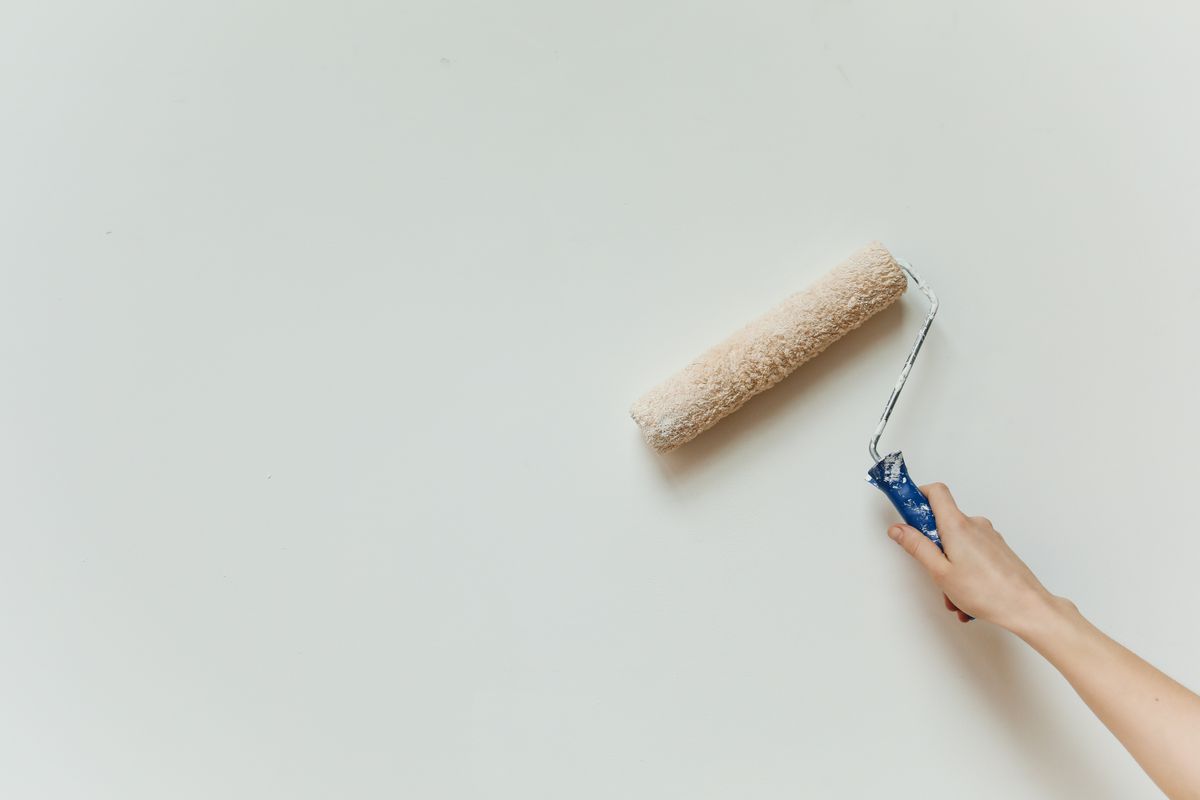
Paint wins when three things are true at once: you have written permission, you plan to stay for several years, and what you want is a whole-room colour rather than one patterned wall. It is also the better tool in high-heat or high-steam spots where adhesive products struggle, and on heavily textured walls where peel-and-stick cannot make full contact.
When peel-and-stick is genuinely the better choice
Choose peel-and-stick when the tenancy is short, the deposit matters, or the look you want is a pattern — botanical prints, stripes, faux grasscloth — that would take stencilling skill and several days to fake with paint. One feature wall behind a bed or sofa delivers most of the visual change for a fraction of the commitment.
Two mistakes that cause most of the damage claims
- Skipping the test patch. Ten minutes of testing prevents the two classic failures: adhesive pulling weak paint off, and a tenant discovering at move-out that the "removable" product was applied over uncured paint.
- Guessing the original paint colour. If you do paint, photograph the paint can label or keep a dried sample card in a drawer from day one. Restoration is easy when you know the exact colour and impossible to argue about when you do not.
The verdict
For most renters, most of the time: peel-and-stick for pattern and flexibility, paint only with permission and a long tenancy. Decide by the removal column of the table, not the installation column — moving day is when this choice is actually paid for.
If you are working through a whole small rental, our guide to tiny apartment decor hacks covers the same deposit-safe thinking for shelves, lighting, and furniture.
— Haider Amin, HGFind